Friday, May 09, 2008

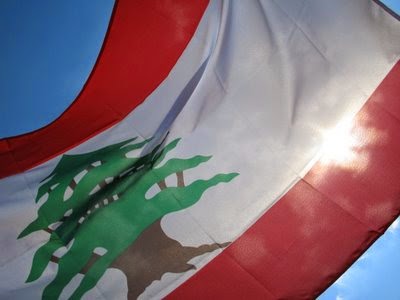
Good Morning Beirut!


قومي يا أحلى لؤلؤة أهداها البحر، قومي لكي يبقى العالم يا بيروت
Rise, O Most Beautiful Pearl of the Sea, Rise for the World to remain O Beirut!

Tuesday, April 29, 2008

A Promise is a Promise

Originally posted at thejewsoflebanon.org on December 21, 2007 @ 2:35 am ·
Filed under
Projects

Introduction by Site Administrator: On November 25, pictures were posted of a Jewish cemetery in the historic port city of Sidon, located in southern Lebanon. We receive hundreds of daily visitors to the site, but it was not a coincidence that Isaac Levy, a Lebanese living abroad, would see the tomb of his father for the first time in 22 years… on the screen of a computer monitor.


We launched this project not through calculation but through conviction, a dialogue over the blog was carried out, and the innocent wishes of Isaac were realized- Fadi (original photographer) once again visited the site and placed flowers on Isaac’s father’s tomb, reciting a prayer, and once again exemplifying the Lebanon we believe in; Lebanon the message of religious tolerance and coexistence. Was it that both of these men shared stories of their fathers, whose bodies are buried in the bosom of the earth in distant lands that brought them together? This bittersweet and emotional story was carried out between two men who never even met each other, who know no more than the first name and email address of the other, to an audience of like-minded people from across the globe who abide to an overriding loyalty to mankind as a whole.
The original pictures and the corresponding dialogue where this was discovered:
Please Click Here


Now, we present to you the new photographs where Isaac’s father was honored, where Fadi showcases the beauty which is the essence of man. Fadi’s accompanying letter to Isaac and the world:


A promise is a promise. It’s a joyous season, the holidays of the 3 monotheistic religions of our country fall in a 21 day period. Hanukkah, Adha, and Christmas. On the second day of Eid, I packed the camera, and paid a second visit to the very windy and wet Cemetery to recite the Fatiha for Isaac’s dad – in lieu of my own father.


I made it, no climbing this time. The stormy weather was the perfect chance to get closer to the collapsing western side of the cemetery. Better still, I could drive the car right to the front entrance of the cemetery this time.


The tombs of Isaac’s family are not difficult to spot, but the name engravings are not there. I recited three Fatihas, took the photos, and felt a warm sense of satisfaction. Perhaps far away, in the western coast of Africa, my dad would rest in peace, and just maybe, someone would pass by one day and recite a prayer so he may rest in peace.

Peace, such a word we miss. Internal peace, such an emotion we lack. We have so much in common, the same air we breathe, the same soil the holds us together eventually. Good and love are indivisible, and there is plenty of them to keep everyone content. Why can’t we realize that? One day I came over a very interesting verse from the Quran – a very “non-denominational” verse! A verse that gave me, least of all, the answer I sought.


Say We believe in God and that which is revealed unto us and that which was revealed unto Abraham, and Ishmael, and Isaac, and Jacob, and the tribes, and that which Moses and Jesus received, and that which the prophets received from their Lord. We make no distinction between any of them, and unto Him we have surrendered. [Quran - 002.136]


If it is religion that separates us, then it is the wrong religion. If it is politics that bring us apart, then it is the wrong politics. If it is anything else, let us reach out and hold each other closer.
In this small beautiful mad country that we call home, we have 18 different denominations; the last and only country in this region to maintain plurality, but at a very hefty price. In this season of celebration of the many faiths, we should be keen to first, realize that we have so much in common, faith wise, country wise, life wise. We have so much to lose if we are off-guard for one second. In this season of holiness, we should realize that Forgiveness is the true path to inner peace. In this season of holiness, when the whole world is turning mad with feuds, with hatred, with wars, with walls and landmines, with religious (sic) segregations, separatism, we are truly blessed, but most of us do not realize it. Some of us who already do have a huge mission.
On the drive back home, I realized that Gibran Tueini (Slain Lebanese journalist, his original oath,
click here) in his oath missed an integral part of our society, a wandering lost part of Lebanon - Lebanese Jews! So I took the liberty to rephrase it:


We pledge by God, Muslims, Christians and Jews, to stay united, forever and ever, to defend our great Lebanon, Long Live You! Long live Lebanon!


A belated Happy Hanukkah, Happy Adha, Happy Christmas!


It is a pledge a few of us, soon to grow in number, to preserve our plurality, and to be the defenders of our brothers’ and sisters’ memories and places until their return.


Sidon’s Jewish Cemetary

Sidon's Jewish Cemetary

Originally posted on thejewsoflebanon.org on November 25, 2007 @ 9:26 pm ·

Filed under Projects

A few kilometers south of An-Nijmeh Square/Place d'étoile , Downtown Sidon, lies the Jewish cemetery, on a small hill supposedly overlooking the ever blue Mediterranean. On the western side, the cemetery is in very bad shape, the hill is sinking, and some of the graves have actually tilted.
Unfortunately, the cemetery is right next to the biggest dump in south Lebanon. A 100-feet high mountain of garbage on the southern coast of Sidon - by all means an environmental catastrophe. The Sidon Municipality has had enough pressure and scandals from the media I presume, so they have guards there preventing anyone from taking photos. They stopped me from taking the photos of the tilting side of the cemetery, or from entering it from that side. I tried to explain I was after the cemetery and had no interest in the dump, to no avail.


Eventually, I had to sneak from the other side of the cemetery, and climb the dusty hill, in broad daylight, which seems the best time to sneak anywhere without raising suspicion! There is no "entrance" per se for the cemetery. I recall there used to be a sign with Hebrew letters marking the cemetery, but that was removed. I think this is some sort of "hiding" the place to protect it from vandals.

Many of the inscriptions that only have Hebrew letters are broken, but those that have Arabic writing and Hebrew letters are left intact! I believe that there is more than a coincidence to this. I got to know that last year the place was cleaned by the municipality, the weeds, trees, etc, seem reasonably within control for a deserted graveyard.

I will try to go in without a very obvious camera next time, or use my cell-phone camera. I am not sure what can be done to preserve that cemetery, but my heart broke to think that these were someone's parents or grandparents, lying there; they died in their country, certain that they will rest in peace forever in their homeland. Look what happened! Nobody, dead or alive, should be desecrated or forgotten in their own country.

I was not sure what to say when I walked there, so I prayed in Arabic, a verse from the Qu'ran that the angels repeat to the souls in Heaven: Salamon Kawlin min Rabb Rahim – "Peace! A word from the Merciful God". Our God, their God, everyone's God. Peace!

A Dusty Comeback

A Dusty Comeback

Yes, it’s true I have not been blogging for over a year, but that doesn’t mean I’ve been kept quiet at all. Blogging in times of war is easy, and since everyone seems to be foretelling another war between “Israel” – (so called), and Hezbollah (henceforth HA) – I thought I might as well get a head start, and a include a brief update of what I have been doing from time to time.

Well, one day the dialogue with Ephraim will become a book, to explain how two minds on opposite sides of the border, and who call each other enemies, thought and attempted a dialogue. Needless to say, it failed, and I don’t have his email, otherwise we could have been email pals exchanging historic facts when we were not “enemies.” No hurry there, when it’s time to fight, HA will get to it, but until then, there is no reason why I cannot behave like a civilized non-violent person.

On the other hand, as if God was testing my, I stumbled upon an article in a Lebanese Daily on a certain website by Lebanese Jews. Turns out the website was constructed by “Aaron” – aka Haron- a Lebanese Muslim Expat from southern Lebanon - about Lebanese Jews. Religious affiliation is not the intention here, it is the concept I’m trying to relay, got it? I became a fan of the site. http://www.thejewsoflebanon.org/

I live in the southern Lebanese city of Sidon – and I decided I should do my part in relaying and documenting the heritage of the Jewish Lebanese compatriots, and exercise to myself more than anyone else that religion – or lack of it , ethnicity, is not what brings me and “Ephraim” apart, it is political conviction: He is a Zionist, I am not, he is racist, I am not, he is bloodthirsty and a war monger, and I am not. So, until he resolves his differences, I decided I should celeberate mine! I should make peace with yet another part of my Lebanese Identity, the wandering Jewish community that had to leave Lebanon during the 1975-1990 war. The house with many mansions that is Lebanon would serve as a model for humankind, differences should be what brings us together.

For more information on the history and heritage of the Lebanese Jewish community, please visit this page http://www.thejewsoflebanon.org/

For avoidance of any doubt, I just wish to clarify that I am involved in this beautiful project out of love and respect for our country, and our Jewish compatriots, the least we can do to preserve our country’s true spirit and identity. By compatriots I mean the Lebanese Jews who were forced into Diaspora. These are our brothers and sisters, and our society owes them an apology (God knows our society owes an apology to all of us). The minute they wish to return home, they will certainly NOT be coming back as tourists. The second objective is, I need to break the taboo inside me, and to finally put into action what I have been brought up to believe, our fight is not with the Jews, it is with the Zionists. Thirdly, to excercise my refounded conviction that peace is the best way to win a war.

How did it start, hmmm...? Yes, I snuck into the Jewish Cemetery in Sidon. It got a bit more complicated. I wrote an article and posted it and then I got a comment that Isaac recognized the grave of his father...

I intentionally want to repost the story in sequence on my blog; the intention is to shed more light on the fight for the plurality of Lebanon. We Lebanese do not forget our brothers and sisters, we might from time to time suffer a relapse, but what ties us together is blood and heritage, blood in our veins, not spilled blood on the streets.

Our country has been harsh on us, it has pushed us away, every morning it puts us to trial, but it is love that keeps us going, who can NOT love this place?

Tuesday, November 27, 2007

Who needs a President?


Call me a fool (not in my face), but I have this strange "free" feeling ever since the Presidential Post moved under the "Help Wanted" section. When Emile Lahoud left the Presidential Palace last Friday, I felt relieved that I lived to see him depart, and proud that regardless of all the traumas and scandals we Lebanese manage to bring on ourselves, and all the dependency and immaturity our political class never fails to display, that while we cannot as a people run our own affairs without hailing the whole world paratroopers and maniacs in, I was proud that we manage to get rid of those in authority eventually, peacefully, but not quietly. What is a 9-year term when it comes to a lifetime president, or to hereditary rule? I even felt a tiny shred of respect for the ex-President. He overstayed his welcome, but at least he walked out, and unlike other Arab rulers, was not hoarded out by an ambulance, a mob, or a funeral procession. I do not want to act as a judge, so I will not comment if Lahoud has blood on his hands, in his veins, or elsewhere. Eventually, long as it may be, Justice shall prevail to either indict the criminals or to acquit the innocent.

Maybe it is that I am the only person in the country thinking -- drum roll -- do we really need a president? It's time to spurt out the suppressed feelings on authority, and a religiously branded officials in specific. Let me go through some arguments on the media on why we need a Maronite President - hopefully I'll run the same comparison one day when the House Speaker retires and no replacement is found:

1- Symbol of the country: Yeah sure, we have been the butt of half the world political jokes lately, and this is only the beginning. Sudan (home of Darfur, Halayeb, and Southern Sudan crisis) sent a peace envoy. Get it?

2- Preserving the Post for Christians: Huh? Demographically speaking, the Christians should press on a secular state – the sooner the better, and drop the religious confessional thing forever, and that goes to the rest of the Lebanese if they knew what's good for them. The Christians do not need a post to keep them or to preserve them, and if they JUST cannot live without that representation, they should realistically seek the Prime Minister's Post or the Parliament Speaker post. In reverse, the Druze go unrepresented in the top three posts, but Weam Wahab is the shining star and spokesperson of the opposition, comprising Maronites, Shiias, and Druze. MP Jumblat is one of the most influential figures in the Majority Party.

3- Protect the Christians: Let's quickly run through who invited the Syrians to protect the "Christians?" – Answer: a president. Who appealed for them to stay – Answer: another "two presidents" – Who ran civil conflict in the so called "East Beirut" – Answer: A presidential candidate assigned by another President at the end of his term. The result: half the Christians immigrated. So much for protection, representation, and preserving the symbol of the Republic.

The so called "Christian politics" have done more harm to the christian presence in the last 50 years than 2000 years of Christian presence in this land.Again and again we fall for the political lies, for the sectarian "bo3bo3" (monster), again and again we stand for our Feudal Masters in power - they manipulate us.

Having said that, enough with the religious labeling rubbish, it's time we think of ourselves as citizens, not tribesmen, or else – there won't be anyone of us left to tell where we went wrong – Christian, Muslim, or Monkey worshippers for all I care.

Wednesday, July 04, 2007

جزيرة الحلوم

هي المرة الرابعة التي أملئ فيها طلب الهجرة، وأحزم أمري، ثم أرمي بالأوراق في سلة المهملات. هي المرة الرابعة بعد المئة التي أسأل فيها نفسي إن كان البقاء خيار أم فرض، وإن كان في البقاء صموداً أم أن في الهروب صمود، والسؤال يبقى، إلى أين؟

لقد زرت البلاد كلها، ولم أجد منزلاً غير منزلي، فما الحل؟ كندا، جميلة وهادئة، باردة، خضراء ومثلجة، ولكنها بعيدة عن لبنان. أميركا، صاخبة وغنية، وفيها كل أصدقائي، ولكنها.. بعيدة عن لبنان.. أوستراليا.. جنة الشمس والمحيط والطبيعة العذراء المترامية.. ولكنها بعيدة عن لبنان.. البرازيل.. بعيدة بعيدة بعيدة.. ولكن.. أليس لبنان بعيد عن لبنان؟ أما من حجة إلا البعد؟

الرومانسية داء لا دواء له.. الرومانسية كجرح الحديد الصدئ لا تزول.. أما الغد فضباب.. أخاف الأمل خشية أن أصاب بخيبة الأمل! ما أصعب الإنتظار.. ما أصعب القرار، والأصعب منه، اللا قرار. وما الأصعب، الألم أم الندم؟

قبرص.. نعم قبرص.. جزيرة الحلوم والشطآن والحمير البيضاء.. لأن قمرها قمرنا، ولأن بحرها بحرنا، ولأن شتاءها مطرنا! إن تضيعوني تجدوني على الشاطئ في لارنكا أرنو نحو الشرق

أن تغادر الوطن لا يعني أنه سيغادرك..فربما أصنع من طلبات الهجرة مركباً من ورق ومن نسغ أحلام ذائبة، وأخاف من الغد لأنه قد يكون اليوم الآخير

Saturday, June 16, 2007

US and Israel Stir Up Palestinian Crisis

Published on Friday, June 15, 2007 by CommonDreams.org
US and Israel Stir Up Palestinian Crisis
by Ira Chernus
It's so obvious that Fatah and Hamas should work together to achieve an independent Palestine. Not long ago, they were proclaiming their unity. So why are they now destroying each other? If you get your news from the mainstream U.S. media, you might well think that they are just two irrational factions, driven crazy by lust for power.
But if you know how to read between the lines, even our mainstream media tell a much more complicated story, one that implicates Israel and the U.S. government too. All the quotes that follow are from reporting on the crisis in the mainstream's flagship newspapers, the New York Times and the Washington Post.
"An Israeli analyst of Palestinian affairs, Danny Rubinstein, said the 'primary reason for the break-up is the fact that Fatah has refused to fully share the Palestinian Authority's mechanism of power with its rival Hamas, despite Hamas's decisive victory in the January 2006 general elections.'" "Fatah leaders failed to heed warnings that the party's corruption and arrogance were alienating voters." "Fatah 'was forced to overrule Palestinian voters because the entire world demanded it do so,' Mr. Rubinstein added. 'Matters have come to the point where Hamas attempted to take by force what they believe they rightfully deserve.'"
The U.S. and Israel have led the world in forcing Fatah to resist Hamas' democractically-won power. In a just-released document, "the United Nations' former top Middle East envoy has sharply criticized U.S. and Israeli efforts to isolate the Hamas-led Palestinian government, saying the policy has further radicalized Palestinian opinion and undercut long-term efforts to establish a viable Palestinian state. The broadside by Alvaro de Soto was contained in a confidential 52-page report he filed before resigning from the United Nations last month. Starting in May 2005, de Soto directed U.N. efforts to ease the Israeli-Palestinian conflict." "With all the focus on the failings of Hamas," De Soto observed, "the Israeli settlement enterprise and barrier construction has continued unabated."
But Hamas' complaint is more specific. "Hamas wants a restored unity government where the security forces would all report to the interior minister." Why is that so important? The security forces have been controlled by Fatah and its security chief Mohammed Dahlan. "During 12 years in power, Fatah had repeatedly cracked down on the [Hamas] Islamists, including in 1996 when the Preventive Security Service, then led by Dahlan, arrested Hamas leaders." "Many of those who were imprisoned remember the treatment they received as cruel and humiliating."
Now "Hamas spokesmen said the movement had no political goal except to defend itself from a group within Fatah collaborating with Israel and the United States. They said they wanted to bring the security forces under the control of the unity government." "A Hamas spokesman said the movement was defending itself, not reaching for unalloyed power. He said Hamas 'is doing the work that Fatah failed to do, to control these [security] groups,' whom he accused of crimes, chaos and collaboration with Israel and the United States."
Indeed, Israel "has made no bones about backing Fatah and attacking only Hamas targets." And the U.S. has funded and supported the Israeli efforts. "Since the election victory of Hamas in January 2006, the United States and Israel have worked to isolate and damage Hamas and build up Fatah with recognition and weaponry." The weapons go to Fatah's security forces, led by Dahlan. CIA operatives have long worked closely with Dahlan's security apparatus.
According to De Soto, "U.S. officials 'clearly pushed for a confrontation' between Hamas and Fatah. … A U.S. [diplomatic] representative, he recalled, said: 'I like this violence . . . it means that other Palestinians are resisting Hamas.'"
In the midst of the current crisis, the Bush administration continues to take sides and stir up the conflict. "Administration officials were pushing Mr. Abbas to dissolve the power-sharing agreement between Fatah and Hamas [and] dismiss the entire government." When Abbas did just that, "Secretary of State Condoleezza Rice expressed support for Mr. Abbas's decrees." Also, "administration officials were weighing the possibility of … pressuring Egypt to seal the tunnels leading from its territory into Gaza; American and Israeli officials say the tunnels are often used to smuggle weapons to Hamas. One administration official suggested Wednesday that the United States might then try to prod Israel into taking down Israeli settlements in the West Bank as a way to shore up Mr. Abbas."
Of course this strategy is likely to turn the Palestinian public even further against Abbas and Fatah. But that seems to be what Israel wants. The Times and Post omitted a key passage from De Soto's report charging that Israeli policies seem "perversely designed to encourage the continued action by Palestinian militants."
Israel has always tried to keep the Palestinians divided. It played a central role in creating Hamas to prevent Fatah from consolidating its political power.
But now Israel seems to have a new reason for fanning the Fatah-Hamas feud into a civil war. Israeli Prime Minister Ehud Olmert "is expected to tell Mr. Bush that Israel favored sealing off the West Bank from the turmoil in Gaza, continuing to prevent contact between the two territories." "Some Israeli security officials say Israel wants to see the West Bank isolated from Gaza."
Why? "A Hamas-run Gaza would likely seal the coastal strip's pariah status and Israel could well block the borders." "One official suggested that Hamas's show of strength in Gaza would make it more likely that the Israeli military would intervene there this summer to cut back Hamas's military power." "Israel would be forced to retaliate harshly to protect its civilians, despite the fact that previous military incursions into the densely populated territory have failed to halt the rocket fire."
If military action is likely to be fruitless again, why would Israel still pursue this strategy? There are several reasons.
"Israel would like to seal off Gaza from the West Bank as much as possible to prevent the spread of Hamas military power there [in the West Bank], where Israeli troops still occupy the territory. Israel would also like to confront Hamas with the responsibility for governing Gaza - providing jobs and food and security to people." Meanwhile, "Israeli officials suggested that Israel would work with Mr. Abbas and a Fatah government in the West Bank." There is also the political benefit any Israeli government reaps by taking a tough stand against the enemy, especially after last summer's fiasco in Lebanon.
Most importantly, perhaps, "rival governments in the West Bank and Gaza would finalize that split, and push prospects of a Palestinian state even further away. Efforts to revive Israeli-Palestinian peace talks, including a recent push by moderate Arab states, would be dealt a big blow because Abbas could no longer claim to represent all Palestinians and would lose his credibility as negotiating partner." "Foreign Minister Tzipi Livni said Hamas control of Gaza would limit Israel's ability to negotiate with Mr. Abbas."
There are still plenty of Israelis who can see that this is self-defeating, that eventually their government must make peace. "Some in Israel are beginning to ask whether it might make sense to have indirect discussions with Hamas, which is clearly not going away."
But doesn't Hamas refuse to negotiate? Isn't it sworn to Israel's destruction? In fact, "there is debate within Hamas about how far to go in meeting Israeli and American demands. Prime Minister Ismail Haniyeh says Hamas's goal is the creation of a Palestinian state in the pre-1967 borders of West Bank and Gaza. The group's military wing, based in Syria, says it will only consider a long-term truce when Israel withdraws from the West Bank." "The offensive in Gaza is driven by Hamas hard-liners. It's not clear, however, how much direction they are getting from Hamas' exiled supreme leader, Khaled Mashaal. The movement's pragmatists, including Prime Minister Ismail Haniyeh, have been largely silent in recent days."
The pragmatists have been silenced by a civil war abetted, if not fomented, by Israel. It's hardly the first time. At least twice last year, when the pragmatists prevailed and Hamas united with Fatah to promote a plan for peace, Israel used violence to provoke Hamas hard-liners and block the peace process, as I have reported here
before.
Why would the Bush administration support this Israeli policy? Martin Indyk of the Brookings Institution describes the fears that haunt our foreign policy elite: "'Gaza will be a full terrorist state, right on the fault line of the Western world. … a haven for all the bad guys - Hezbollah, Islamic Jihad.'" "Hamas is seen as a terrorist organization by the United States, Israel, and much of the West." "A Hamas victory in Gaza would put an Iranian-backed militia not just on Israel's northern border, but also its southern one" — or at least a supposedly Iranian-backed militia, since "it's not clear how much direction they are getting from Iran." "Equally alarming to Bush administration officials is the prospect that if Hamas does not take over control of Gaza, and the fighting there continues, more of Gaza's young and increasingly frustrated population might be driven into the embrace of Al Qaeda, a rival of Hamas that, until now, had largely been shunned in Gaza."
Perhaps this is all overheated imagining. If it is accurate, though, it may not really be so alarming to the administration's hawks. Perhaps it would help them create the radically polarized world they have warned about, the only kind of world that can sustain the policies they still so ardently promote. Whether they want it or not, that's the kind of world they may be helping to create as they fan the flames of Palestinian civil war.
Ira Chernus is Professor of Religious Studies at the University of Colorado at Boulder and author of Monsters To Destroy: The Neoconservative War on Terror and Sin. Email: chernus@colorado.edu